Youth Lagoon

Empire Records has to be one of the most underrated music movies. For one thing, its advocacy for locally owned record stores seems more relevant now than ever, even though the nature of their enemy has changed dramatically. Little did we know that Warren, the shoplifter, would evolve and become the real villain. Another great thing about Empire Records is that it’s chock full of well-encapsulated truths about rock music, from the disappointment one can feel upon finally meeting/trying to have sex with a teen idol, to the difficulty that rock stars have maintaining their credibility as they age, to the fact music can act as a filter for our raw emotions, rendering us better equipped to deal with the pressures of day-to-day life. But of all the musical truisms that Empire Records illustrates, my favorite has to be Lucas’ band name advice to Mark: “Always play with their minds.” It seems like an overly philosophical piece of dialogue when Lucas delivers it, but he’s not wrong — cognitive dissonance is crucial to rock music. Taking cues from blues (the blue note gives you a musical itch that only the root note can scratch) and jazz (crazy shit happening everywhere), the most interesting and important rock musicians have always been the ones that challenge us, both in terms of the songs they write and the image they project. One artist currently has different parts of my brain pitted against one another in a ridiculously enjoyable fit of cognitive dissonance, and that artist is Youth Lagoon. On one hand, you have Trevor Powers’ age (just 22) and his vocal style (as vulnerable-sounding as it gets). On the other hand, you have the quality of his debut album, The Year of Hibernation (wonderfully layered and sophisticated), the wisdom of his lyrics (well beyond his years), and the overall feeling of nostalgia he projects (manifested poignantly in the sepia-toned video for his song “Montana”). It just doesn’t add up… and I love it. Pitchfork recently took this set of contradictions one step further in their new series Tunnelvision, which invites innovative directors from all over the web to shoot unique performance videos. I had gotten so accustomed to the yearning, sentimental, and therefore removed texture of Powers’ reverb-soaked vocals on “July” that director Charles Bergquist’s decision to use tightly framed shots was startling at first, like a conceptual version of the dolly zoom shot in Jaws, in which the camera advances on Chief Brody’s face while zooming out at the same time (or maybe it’s the opposite — it’s really hard to tell). It’s an intentionally disorienting experience, but oddly pleasing at the same time. I’m not sure if this is exactly what Bergquist had in mind, but I found his video, and Powers’ performance, to be wildly enjoyable and engaging, and I hope you’ll check it out above, listen to the album version below, buy The Year of Hibernation here, and have some fun confusing the crap out of your brain.

Youth Lagoon — “July


Battles

What do the mountains of northeastern Afghanistan and proggy math rock have in common? For starters, they’re both wild places where seemingly anything can happen. They’re also both extremely rocky (sorry, I had to). Most importantly, they share an essential quality that largely defines them: inaccessibility. Just as the Korangal Valley in Afghanistan wouldn’t be so wild if it wasn’t a remote, mountainous deathtrap for invading armies, experimental rock wouldn’t be experimental if it didn’t push the envelope of what is conventionally considered possible and palatable. Avid enthusiasts of complex, time signature-shredding music may say, “Hell yeah! That’s the best part!”, but for bands who aim to make a good living playing this type of music, it seems like a tough line to walk. How do you keep pushing the envelope without pushing people away? How???

I had the pleasure of seeing that question asked and successfully answered when Battles performed at the 9:30 Club in Washington, D.C. this past Sunday night. Battles is a very special band, boasting outsized doses of creativity, musicianship and precision, as well as one of the best drummers I’ve ever seen (please put seeing John Stanier in person on your musical bucket list — he’s nothing short of otherworldly), all of which help them construct songs that are unique and intellectually challenging. Think musical abstract (but not too abstract) painting. But throughout Sunday’s show, it became more and more evident that the band has a special knack for connecting with their audience, as well.

Continue reading

Feist

POP QUIZ! Where were you the last time you sang out loud? Doesn’t matter what song, doesn’t matter what volume… 3… 2… 1… PENCILS DOWN! I willing to guess a sizable percentage of you gave one of two answers — shower or car. There’s something about these two personal spaces that makes breaking out into song so tempting. And while the shower offers an excellent private sound stage with fantastic acoustics for belting out, you know, whatever, the car takes it to a whole ‘nuther level. You still have privacy, but you also have car stereo accompaniment, a volume knob for crankin’ when the spirit moves you, and a steering wheel for tapping or drumming or you know, whatever. In that sense, the car itself is like an instrument, and I have never in my entire life seen anyone “play the car” better than Leslie Feist did in her recent Black Cab Session. For some time, I’ve enjoyed how these automotive musical vignettes force artists into stripped-down versions of songs, giving a fresh perspective on the track’s basic structure and composition. Feist turns the tables on this idea, using voice, guitar, feet, the floor and even the ceiling to stage a truly fierce performance of “Undiscovered First” from her new album Metals. And as incredible as it is to watch her stomp her feet and slam the ceiling alongside her band mates, it’s just as gripping when you absorb the whole sonic landscape with your eyes closed. My immediate reaction after listening this way was that there has to be some sort of Grammy category that this session could dominate, like “Best Recording Made in a Moving Vehicle” or maybe “Best Use of Spontaneous Percussion.” While I’m busy petitioning the National Academy of Recording Arts and Sciences, I recommend you watch the session once, listen once, and soak in the fierceness. Oh, and if you’re so inclined, listen to the album version of “Undiscovered First” below and buy Metals from iTunes here.

Feist — “Undiscovered First

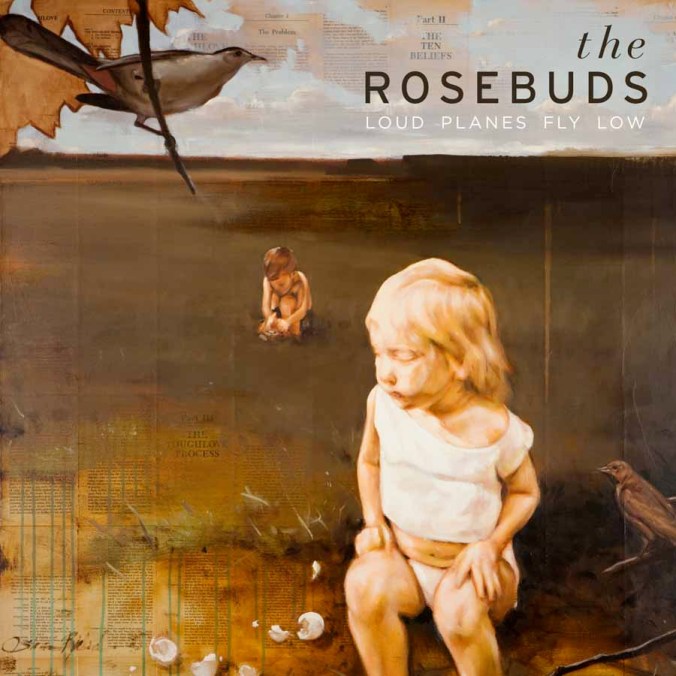
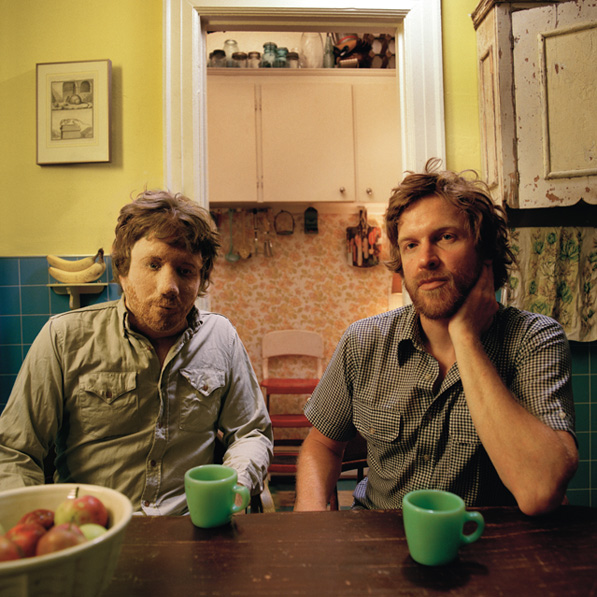
The Rosebuds

Loud Planes Fly Low

If you’ve been to a fair number of concerts, you may know this feeling: You’re at a show, you’re having fun, the band is playing great, but you can’t escape the notion that you’re seeing the same performance that the Navy kids in Norfolk saw two nights earlier, which was the same show that plaid-clad Portlanders saw two weeks before that, the guests of Hotel Boulderado two months before that, and so on. Often there’s nothing deficient about these shows, but there’s still an unmistakable and indelible portability to them. If you know this feeling, then I bet you know its polar opposite: The notion that you’re seeing something that cannot be replicated, something that will inspire jealousy in the people who couldn’t make it out that night. Friday at the Camel was one of those nights for me. In fact, the Camel seems to be a magnet for these one-of-a-kind shows. One of the most memorable concerts I’ve ever seen happened there this past April, when Justin Townes Earle put on an emotionally-charged post-rehab performance that was equal parts frightening and brilliant. Though it wasn’t frightening (thankfully), Friday’s Rosebuds show was definitely brilliant, full of moments that stand out in their uniqueness, and I won’t soon forget it. Moments like…

…Landis Wine and Jay Ward of White Laces performing “Calcutta.” Wine and Ward kicked off the show with a special acoustic opening set, and I felt very lucky to be there to see it — not just because it’s fun to see talented musicians showcase their flexibility (Wine embraced the “VH1 Storytellers”-esque vibe, relaying stories about the songs they strummed, and Ward seemed perfectly at ease with a guitar in his normally bass-laden hands, even busting out a mandolin for one song) — but also because we were treated to a harmony-splashed rendition of  “Calcutta,” a track they covered for Love Me When I’m Gone: A Tribute to Ross Harman. It was a touching performance of a painfully beautiful song written by their late friend. You can listen to Harmon’s version here, and you can click here to contribute to a Kickstarter fund that’s raising money to have Harman’s music pressed to vinyl.

…Treesa Gold playing 1,243 notes in the span of 4 seconds (all numbers approximate). I liked Goldrush when I saw them at September’s RVA Music Fest, but I was standing too far away to fully appreciate some of the qualities I saw up close on Friday, like Matt Gold’s booming and brilliantly bowed double bass, Prabir Mehta’s swift guitar playing and pure frontman personality and Treesa Gold’s blindingly fast violin. I mean good lord, there were a lot of notes coming out of that violin. I’m pretty sure I looked like this for a while. The group offers songs that balance that type of complexity with fun and catchy melodies, many of which I could recognize right away from having heard them in September. I highly recommend a trip down YouTube lane to see and hear what I mean.

…someone in the crowd buying the Rosebuds shots. I didn’t know this until singer Ivan Howard mentioned it during their set, but Friday was the very last stop on the Rosebuds’ lengthy American tour. With a rear view mirror full of dates all over the country, some opening for Bon Iver, the Rosebuds seemed to be having a great time, and they sounded outstanding while they were doing it. The band paints such amazing pictures with their recorded music, and I’ve really enjoyed exploring their most recent record, Loud Planes Fly Low, so it was a thrill to see those pictures come to life in such vivid color and texture. There were so many moments to love — a captivating performance of “Cover Ears,” a Camel-wide singalong during “Nice Fox,” and, in what may have been my favorite episode of the evening, a good samaritan buying the band shots (I don’t know for sure what this person bought, but I heard someone say “Goldschläger,” which has to be the most hilarious shot to buy for a band), which they graciously knocked back and chased with a minute-long, improvised, bass-fueled jam. In those moments, the concert wasn’t just a concert — it also felt like the wrap party for a successful theater production, and I’m so glad to have made the trip to the Camel to help them celebrate. Check out the album version of “Cover Ears” below and click here to grab Loud Planes Fly Low on iTunes. Or, if you’re feeling frisky, head to your local record store, where you can buy the album from an actual, living, breathing human being who will be on your side of the Great Human-Robot War of 2034.

The Rosebuds — “Cover Ears

Lianne La Havas

In the good old days, before it was taken over by Groupon and Living Social, people used to use email for all sorts of things… checking in with friends (“Hey asshole, you still owe $50 for fantasy football.”), coordinating bachelorette parties (“I don’t want to do anything too crazy you guys, maybe just some wine tasting or a spa day and then I guess we can go out for a little later that night but NOTHING TOO CRAZY YOU GUYS FOR REAL”), even staying in touch with family (“Mom I need $50 for fantasy football can you send a check thanks love you bye”). Email also used to be one of my favorite ways to follow bands. I’ve always enjoyed Guster’s updates and studio journals, penned by drummer-who-could-very-well-be-a-writer Brian Rosenworcel (not to be confused with singer-who-wrote-a-really-cool-children’s-novel Colin Meloy of the Decemberists), but I haven’t kept up with email lists as much lately — especially since so many seem like they’re coming directly from record companies, sporting rich HTML and graphics, and don’t come close to fostering a one-on-one connection with the artist. I’m happy to say that Lianne La Havas has snapped me out of my complacency. The first few messages to her list have been refreshing in their lighthearted humor and sense of intimacy. In addition to updates about shows and releases, she imparts weekly advice, like “Eat more soup. You stay fuller for longer,” and “Remember never to swallow the snot” — both excellent tips. In her most recent email, she included a link to her hypnotic Take-Away Show, which everyone should stop what they’re doing and watch immediately, and she also reminded us that she’d be appearing on Later… with Jools Holland. Her companions on Later…’s circular sound stage last night included Bon Iver and Feist, altogether a perfect storm of “Shit… does Verizon get BBC2?” The answer is no. Or I couldn’t find it. In any case, I waited patiently for video of the proceedings to show up online, and La Havas gave a performance of her song “Age” that was well worth the wait. Standing at the convergence of two spotlights, alone on the massive Later… stage, she brought to life the song’s sophisticated marriage of vulnerability and assertiveness, finger picking an electric guitar and singing in a voice that was sultry one moment and forceful the next. All throughout, her smile and apparent warmth echoed the personality I found in her electronic correspondence, filling the studio and leaving me all the more excited to receive her next update. Check out her Later… performance of “Age” above and the version from her Live in L.A. EP below, which you can snag for the meager price of an email address (rest assured, this is one email list you won’t bemoan joining).

Lianne La Havas — “Age

Doug Paisley

Constant Companion

I’ve been good about merch lately. No shirts, no commemorative tote bags (What? It’s a joke. I’ve never gotten one of tho… OK FINE, but just that once), just a few records here and there. My most recent merch purchase, or merchase if you’re into that kinda thing, happened more “there” than “here,” in that it was made when I was in Portland, OR at the Doug Fir Lounge on October 6, just as Megafaun was getting ready to take the stage. Doug Paisley had just performed an arresting opening set, one that rendered an entire basement lounge of drinking twenty-somethings silent and holding their breath. With a left-handed guitar, his voice barely above a whisper, and the audience hanging on his every word, Paisley delicately navigated through a series of soulful and tender country songs about heartache, redemption, and love. At one point I closed my eyes and it seemed like Paisley’s words, delivered almost apologetically, were more like thoughts that had accidentally escaped from someone’s head (Maybe Sam Elliot’s. Paisley’s got some seriously gruff gravitas chops, or graffichops, if you’re into that kinda thing). It was stunning. Check out “City Lights” to see what I mean.

Doug Paisley — “City Lights

The trance was broken only by eager applause between songs and a single admonishing “SHHHHHHHH” during one of his later tunes, when a few people standing near the back were talking too loud and someone in the crowd stepped up to set them straight (To the guy/gal who did the shushing, you’re my hero). As soon as his set was finished, I picked up a vinyl copy of his newest album, Constant Companion, the symbolism of which name being impossible to overlook [just made the connection almost two weeks later], as I had to carry the record by hand back to the hotel, then to the Portland airport, then all the way back to Richmond, VA. In case you were wondering, records don’t count against your two carry-on quota and fit nicely next to the puke bag in that sub-tray-table magazine pouch. Thankfully, my copy of Constant Companion passed the travel test with flying colors and found its way to my record player, where it’ll be spending a great deal of time. As I listen in my living room, I can hear the same intensity that froze the air of the Doug Fir Lounge on October 6, plus we’re treated to some goosebumps-inducing guest spots by fellow Canadians Leslie Feist and legendary organist for The Band, Garth Hudson. Speaking of guest spots, Megafaun summoned Paisley to the stage at the end of their set for a full-band version of his song “What I Saw.” Check out that performance and the album version below, “City” Lights” above, and grab Constant Companion here.

Doug Paisley (with Megafaun) — “What I Saw

Doug Paisley — “What I Saw

Megafaun

Some people were blessed with the gift of foresight — “planners” I hear they’re called. I am not one of those people, which is why it’s a minor miracle that I got to see Megafaun this past Thursday. Early last week, my wife and I were a few days away from hopping on a 737 bound for Portland, OR (By “bound for Portland,” I mean bound for Houston, then Portland. I’m pretty sure Lewis and Clark took the same route.), when I did something so out of character, I’m surprised my wife didn’t accuse me of being involved in a Face/Off-style government plot — I checked to see what concerts would be happening while we were in town. It seems so simple, yet I can assure you, this was an evolutionary leap on par with the use of perspective in Renaissance painting and the special effects from Jurassic Park. The theme from 2001: A Space Odyssey should have been playing in the background as I looked online at venues’ websites and saw that Megafaun would be rocking the Doug Fir Lounge the evening after we flew in to PDX. This was very exciting news. I started learning about the North Carolina-based roots rock band over the past few months from Bon Iver’s glowing tweets about them, and I finally heard their music when it was featured on a recent episode of NPR’s All Songs Considered. I’ve had their self-titled album in heavy rotation ever since, but Thursday night’s performance was even better than I could have hoped. Amidst the backdrop of a super cool basement lounge that felt like a cross between a ski lodge and a woodsy version of Dr. Evil’s hollowed-out volcano lair, Megafaun put on a performance that made me and my wife fans for life. I’m a sucker for well-executed harmonies, and I was in the right place, as all four members of the band contributed to one sweet sounding vocal arrangement after another, culminating in their a cappella performance above of “Second Friend.” I may not have been blessed with the planner gene, but I felt truly blessed to have been at Doug Fir on Thursday night, and I’m definitely going to make a habit of checking for concerts before I head on vacation. Check out “Second Friend” above, hear the album version below, and buy their amazing self-titled album here.

Megafaun — “Second Friend

Wilco

(Editor’s note: Wow, What the Hell Just Happened Week certainly dragged on, didn’t it? The idea was to recap all the amazing music I saw between 9/21 and 9/25, openers and headliners alike, and though travels prevented me from finishing this last chapter in a timely fashion, they also gave me plenty of time to mull it over. Without further ado, here’s the final installment (complete with eyeball-friendly left justification and paragraphs!).

What the Hell Just Happened?!? Week: Day 5 — Wilco

It’s hard to write about your favorite band in the whole wide world, and I can say with conviction that Wilco has earned that distinction for me.

Despite that conviction about my favorite band, I can’t tell you what my favorite song in the world is. The same is true with albums. I think it’s because the answer changes so often. But shouldn’t it be the other way around? Songs don’t change. They can be remixed, covered, sampled and chopped up to fit into a 15-second commercial, but the original text stays the same (Can Let It Be Naked be the one exception? Can we all pretend that’s the real one?).

Bands, on the other hand, evolve. Bands venture in new musical directions, add members, find religion, go to rehab, change labels, become political, release concept albums, go back into rehab… they’re as dynamic as the people that comprise them. Such is certainly the case with Wilco, a group that’s undergone a lineup change after almost every record, the exceptions being their latest two efforts. So why is it so easy for me to say that Wilco is my favorite band? Why hasn’t that changed? Their show at Merriweather Post Pavilion on September 25 gave me the perfect opportunity to figure that out, but not for the reason I expected.

Continue reading

Foster the People

What the Hell Just Happened?!? Week: Day 4 — Foster the People

Being a floor tom ain’t easy. You labor in the corner of the drum set, the last stop on solos and fills (if the guy with the sticks even gets to you). You watch as song after song is written about your bigger, bassier brother, the kick drum. Always the bridesmaid, never the bride. Well the times they are a-changin’, thanks to a phenomenon that was on display at September 23rd’s Foster the People show at the National in Richmond, VA. I’m talking about the lead singer floor tom solo. Please tell me you’ve seen this… there’s an extra stand-alone floor tom set up within reach of the frontman, and as the song reaches a crescendo, he or she grabs a set of drum sticks and starts pounding away. Mark Foster of Foster the People did just that at the National during “Helena Beat” (start at the 3-minute mark), and the gents of Dale Earnhardt Jr Jr did the same just two days before at the Southern in Charlottesville. It never fails to get people going, and it’s symbolic of a larger theme that united both shows — how to put on a satisfying live show when your studio music relies heavily on sampling. The lead singer tom solo is fascinating to me, in part because it strikes me as a form of vicarious audience participation. Few people at any given concert can play a full set of drums, but just about everyone, if given the opportunity and some sticks, could wail away on a floor tom. I think that’s where the excitement comes from — people can picture themselves on stage, taking all their energy and aggression out that drum, just as Mark Foster was. Maybe I’m wrong, but either way, it works… and so did Foster the People. They put on one of the highest-energy shows I’ve seen, running around the stage, earning every single clap, whistle and shriek (yes, shriekers were out in full force). I walked away from the National with a great deal of respect for a band that had a meteoric rise to fame, but can back up their notoriety with a hard-working, substantive live show. To see what I mean, check out the video I found of the night’s very last song “Pumped Up Kicks” above (studio version below). Be sure to stick around for the floor tom action at the 4:15 minute mark! If you dig it, buy their album here.

Foster the People — “Pumped Up Kicks

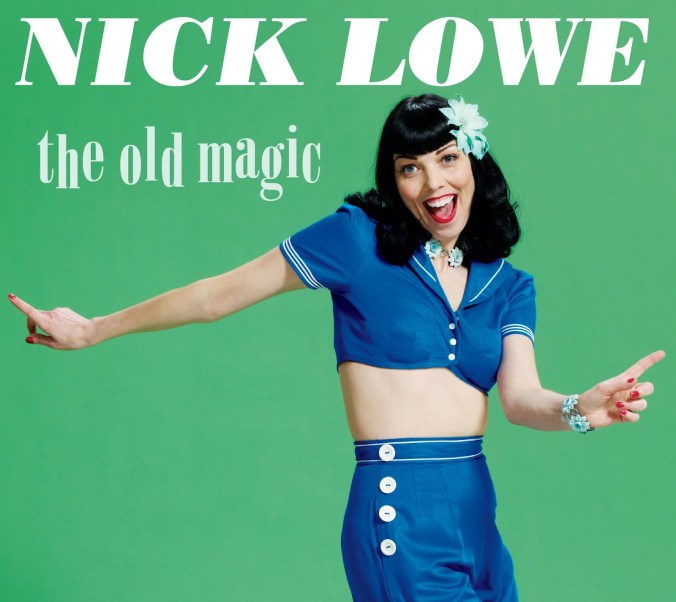
Nick Lowe

The Old Magic

What the Hell Just Happened?!? Week: Day 3 — Nick Lowe

Sometimes music feels like a enormous game of connect the dots — one you can play for your entire life and never finish. Nick Lowe’s solo-acoustic opening set before Sunday’s Wilco show at Merriweather Post Pavilion gave me the chance to connect a few dots that I didn’t even know were close to one another, and I’m incredibly glad I was there to see it. Before Wilco released their “I Might” single, the first from their new album The Whole Love, I didn’t know much about Nick Lowe. When I heard the single’s b-side, a cover of Lowe’s “I Love My Label,” I asked my father-in-law about its author and found out about Rockpile, the influential band Lowe fronted alongside Dave Edmunds. I enjoyed what I heard, and was excited when I found out Lowe would be opening for Wilco. But the connection that really blew my mind wasn’t made until halfway though Sunday’s outstanding opening set, when I realized he was playing Elvis Costello’s “Alison.” It was a great “Hey, I know this song!!!” moment. What I didn’t know was that Lowe produced the song, and that he’s credited with writing another tune made famous by Costello, “(What’s So Funny ‘Bout) Peace Love And Understanding,” which we also got to hear on Sunday. Lowe’s Wikipedia page is full of these crazy connections, like how he married (and divorced) Johnny Cash’s stepdaughter, but Lowe and Cash remained friends and recorded together and oh god Wikipedia steals so much of my time. But that’s one of my favorite things about music — the dots are just waiting to be connected, and there’s no right or wrong way to do so. Preview Lowe’s new offering, The Old Magic, below and grab the album from iTunes here.

Nick Lowe — The Old Magic