
Happy Nigel Tufnel Day!
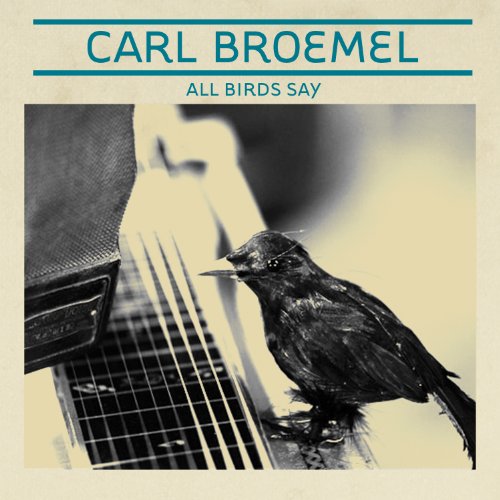
Sometimes you have to take an unpopular stance, though it’s nice when you have a good friend standing unpopularly with you. My buddy Coyle and I are both staunch supporters of the most divisive song in the entirety of the My Morning Jacket catalog. That’s right, Coyle and I are proud members of team “Highly Suspicious.” I’m pretty sure we both like it for the same reason, too — the hilarious, over-the-top serious way Carl Broemel, co-lead guitarist and backup singer to Jim James, delivers the song’s title lyrics. Watch the band performing the song on Austin City Limits to see what I mean…
How can you not love that? It falls in some strange netherworld between parody and badassery, and ever since the first time I saw a video of “Highly Suspicious” being staged, I’ve watched Broemel with an added sense of enjoyment. That’s why I was so elated when the wonderful people at Daytrotter recently posted a session that finds Broemel performing 4 of his own songs that I had no idea existed, all of which can be found on an album he released last year called All Birds Say. I dove into the record as soon as I could, and it didn’t take long to learn that Broemel is as gifted at writing solo material as he is at the guitar-thrashing, falsetto-floating duties he executes so expertly as a member of My Morning Jacket. All Birds Say is a mellow record to be sure, but there’s a great deal going on in these largely down-tempo songs worth noting, including a fascinating relationship between theme and substance. Many of the songs deal with the idea of spare time, surely a commodity when you’re part of an overwhelmingly successful band, with titles like “Sunday Drivers” and “Retired,” and lyrics like “I was waiting for the moment to be perfectly clear, when the world would stop and let me catch up,” and “save an hour for yourself.” Images like these appear throughout, and pair perfectly with the choice of tempo and mood. Too perfectly, in fact. That’s what’s most interesting about All Birds Say — it’s a leisurely sounding record about trying to find time for leisure, which, as any busy person can attest, is hard work. After doing some research, I wasn’t surprised to find that he recorded the album one song at a time, whenever he had an opportunity, over the course of 4 or 5 years, so it’s no wonder he’s focused on those elusive spare moments. Even his guitar work reflects this odd coupling of efficiency and relaxation. “Questions” features a walkdown that sounds so breezy on the surface it could have followed a drunk down the street in an old Disney cartoon, but it includes just about every single in-between note that particular scale can hold. So loose, yet so tight at the same time. And these extra, in-between notes are everywhere on All Birds Say. I’m enjoying the album so much I can’t decide which song to recommend, so I’m including performance videos of three of my favorites — “Questions,” “Carried Away,” and “Heaven Knows,” where he pushes the leisure theme even further by playing the song on an autoharp in the middle of a round of golf. Check out these three great songs below, his Daytrotter session here (you’re a member already, right?), and buy All Birds Say here.
Carl Broemel — “Questions“
Carl Broemel — “Carried Away“
Carl Broemel — “Heaven Knows“
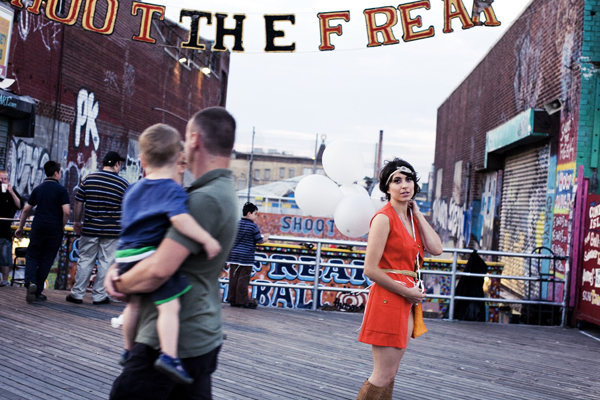
We live in a cynical world. A world full of misinformation, self interest, greed and deception, one that’s trained us to question everything we see, hear, smell, taste and feel. For crying out loud, we can’t even walk our friends and family to the gate at the airport anymore, which makes this heartwarming moment heartbreakingly impossible. I love that scene. This is the best we can do now. Sigh. Plus, all this skepticism means that when you encounter real sincerity, whether it’s in another person, or a gesture, or a piece of art, it can be downright alarming. But you know what? It’s also unmistakable. It jumps out at you. I recently encountered a song that jumped out at me thanks to its inherent sweetness and sincerity, and I’ve been playing it a few times in a row whenever I need a reminder that the world isn’t as hard-hearted as it may seem sometimes. I’m talking about “If You Don’t Want To Be Alone” by Firehorse, one of the bands I learned about from All Songs Considered’s fantastic CMJ recap episode. “If You Don’t Want To Be Alone” is written from the perspective of a person who’s yearning for a loved one to return home, and it paints a picture of unconditional devotion and steadfast companionship that makes every cynical notion in my body melt away, with lines like “You can come back whenever you’d like” and “If you need rest, I’ll stay right by your side.” And the lyrics aren’t the only touching part of the song — the arrangement reinforces this narrative beautifully. Singer Leah Siegel’s voice is set against a backdrop of sparse instrumentation, reverb-soaked and distorted guitars and fading echoes of indeterminate origin, making her words seem like an earnest oasis of humanity in a vast and frightening sonic darkness. That image of a small light shining brightly in the dark was so moving during one particular cluster of repeated listens that I tweeted at her so I could say thank you for improving my afternoon, and that her album And So They Ran Faster… was exactly what I needed to hear at that particular moment. Sure enough, she sent back a short note of thanks that exhibited the same genuineness that drew me to her music in the first place. Much like her song, it was the kind of exchange that makes the rest of the world feel a little less cynical, which counts for a lot in my book. Give a listen to “If You Don’t Want To Be Alone” below, buy the album here, and click here to learn about the charitable organization for which the song was originally written, the Topsy Foundation.
Firehorse — “If You Don’t Want To Be Alone“
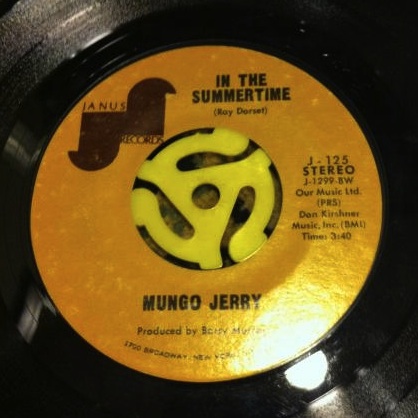
Oh daylight savings time, you double-edged sword, you. On one hand, you generously give us an extra hour of sleep each fall (which I promptly throw away by staying up extra late on Saturday night, but still…). On the other hand, “falling back” means it’s already dark when we leave work, which raises just about everyone’s ire, even those of us without Seasonal Affective Disorder, the most insensitively named psychological disorder since Wanton Unfortunate Sissiness Syndrome, which, as we all know, took the crown from Neurologically Unstable Tempestuousness Sickness. But you know what, daylight savings time? YOU’RE NOT THE BOSS OF ME! It just so happens that the day before you so rudely made it feel like winter overnight, I unwittingly armed myself with two powerful weapons that, as I listen to them on this dreadfully depressing Monday, make your assault on happiness and a gradual transition away from summer seem, well, wussy (my apologies to those with W.U.S.S.). You see on Saturday, I went 45 diving at Plan 9 and came to the surface holding, among other things, Mungo Jerry’s “In the Summertime” and the Who’s “Summertime Blues.” While both were recorded by English rock groups in the 1970’s, the mood of these songs couldn’t be more divergent. “In the Summertime” is a carefree original tune with lyrics about having fun, fishing, drinking and driving, and, um… not buying poor women dinner before you try to have sex with them. Conversely, “Summertime Blues” is a canonical, angst-ridden anthem that chronicles a teenager’s frustration with being too young and poor to make his own decisions. Looking closer, even the songs’ writers are opposites. “Summertime Blues” was originally written by rockabilly artist Eddie Cochran, who died in a road accident when he was just 21. Mungo Jerry, however, is still active, thanks to intrepid frontman/mutton chops connoisseur Ray (don’t call me Jerry) Dorset, who has led the band for an astonishing 41 years. But as different as these songs are, they both chase away the seasonal gloom by conjuring some really special memories of fall’s younger, more popular sibling. “In the Summertime” calls to mind all the fun I had performing the song with bandmates 4eva Doug and Brett when I had just graduated college, and “Summertime Blues” takes me back to car rides spent listening to early rock with my 50’s-crazed dad, back when I was way too young to understand that he was dutifully laying the groundwork for an appreciation for the genre’s founding fathers. With these two songs filling up the living room, it doesn’t matter if the clocks have been set back to the correct hour, or even which month is showing on the calendar, because it sounds like summertime, and that’s close enough. Listen to both tunes below and join me in telling daylight savings time to stick it where the sun does shine.
Mungo Jerry — “In the Summertime“
The Who — “Summertime Blues” (Eddie Cochran cover)
Empire Records has to be one of the most underrated music movies. For one thing, its advocacy for locally owned record stores seems more relevant now than ever, even though the nature of their enemy has changed dramatically. Little did we know that Warren, the shoplifter, would evolve and become the real villain. Another great thing about Empire Records is that it’s chock full of well-encapsulated truths about rock music, from the disappointment one can feel upon finally meeting/trying to have sex with a teen idol, to the difficulty that rock stars have maintaining their credibility as they age, to the fact music can act as a filter for our raw emotions, rendering us better equipped to deal with the pressures of day-to-day life. But of all the musical truisms that Empire Records illustrates, my favorite has to be Lucas’ band name advice to Mark: “Always play with their minds.” It seems like an overly philosophical piece of dialogue when Lucas delivers it, but he’s not wrong — cognitive dissonance is crucial to rock music. Taking cues from blues (the blue note gives you a musical itch that only the root note can scratch) and jazz (crazy shit happening everywhere), the most interesting and important rock musicians have always been the ones that challenge us, both in terms of the songs they write and the image they project. One artist currently has different parts of my brain pitted against one another in a ridiculously enjoyable fit of cognitive dissonance, and that artist is Youth Lagoon. On one hand, you have Trevor Powers’ age (just 22) and his vocal style (as vulnerable-sounding as it gets). On the other hand, you have the quality of his debut album, The Year of Hibernation (wonderfully layered and sophisticated), the wisdom of his lyrics (well beyond his years), and the overall feeling of nostalgia he projects (manifested poignantly in the sepia-toned video for his song “Montana”). It just doesn’t add up… and I love it. Pitchfork recently took this set of contradictions one step further in their new series Tunnelvision, which invites innovative directors from all over the web to shoot unique performance videos. I had gotten so accustomed to the yearning, sentimental, and therefore removed texture of Powers’ reverb-soaked vocals on “July” that director Charles Bergquist’s decision to use tightly framed shots was startling at first, like a conceptual version of the dolly zoom shot in Jaws, in which the camera advances on Chief Brody’s face while zooming out at the same time (or maybe it’s the opposite — it’s really hard to tell). It’s an intentionally disorienting experience, but oddly pleasing at the same time. I’m not sure if this is exactly what Bergquist had in mind, but I found his video, and Powers’ performance, to be wildly enjoyable and engaging, and I hope you’ll check it out above, listen to the album version below, buy The Year of Hibernation here, and have some fun confusing the crap out of your brain.
Youth Lagoon — “July“

Jason Isbell is one of my favorite musicians to follow on Twitter, in part because he has a fantastic philosophy about musical guilty pleasures. He summed this doctrine up perfectly on October 1 of this year, in a tweet that read, “There should be no guilty pleasures. Feel guilty about not enjoying things. Enjoy everything you can.” Those 102 characters made me so happy (as did some similar comments he made in an interview with Hear Ya), because they encapsulated my long held conviction that music is entirely what you make of it — you can dwell all you want on a band’s faults or a record’s weaknesses, but it’s way more fun to celebrate the aspects of that band or record that bring you joy. One reason this is true is that music, in many ways, is a personal experience. Sure, concerts can double as social events, and making music is extremely interactive, but the way we react to the songs we hear through our headphones is as personal as it gets. Sounds travel down our uniquely shaped ear canals, hit our one-of-a-kind ear drums and make their way up to our beautifully peculiar brains, and no two reactions are ever the same, so why apply a collective construct like shame to such a wonderfully solipsistic phenomenon? This idea jumped to the front of my mind when I was flipping through singles at Plan 9 and found a 7-inch single that was released to promote PCU, my favorite “Oh man, I can’t wait to get to college, it’s gonna be so awesome!” movies of my adolescence. My inner 14-year-old was beyond thrilled. I have such fond memories of, and strong mental associations with, the two featured tracks — Mudhoney’s cover of Elvis Costello’s “Pump It Up” and George Clinton and Parliament Funkadelic’s recording of “Stomp” — that I honestly couldn’t believe what I was seeing. It was as if I had stumbled across the glowing contents of the Pulp Fiction briefcase in that record bin (And it was just $3!). For a moment, I felt silly for my enthusiasm, but just as quickly, I realized I had found a glowing (literally — the vinyl is red!) testament to the fact that value is in the eye, or ear, of the listener, and that even though a record may only fetch a few bucks on ebay, it can still feel like a totally priceless artifact. If you’re as crazy about PCU as I am, you can bid on your own copy of the single here, and listen below to “Pump It Up” and “Stomp.” And don’t forget, no classes before 11, and beer is your best friend, so drink a lot of it. Now, can you blow me where the pampers is?
Mudhoney — “Pump It Up” (Elvis Costello cover)
George Clinton – “Stomp“
What do the mountains of northeastern Afghanistan and proggy math rock have in common? For starters, they’re both wild places where seemingly anything can happen. They’re also both extremely rocky (sorry, I had to). Most importantly, they share an essential quality that largely defines them: inaccessibility. Just as the Korangal Valley in Afghanistan wouldn’t be so wild if it wasn’t a remote, mountainous deathtrap for invading armies, experimental rock wouldn’t be experimental if it didn’t push the envelope of what is conventionally considered possible and palatable. Avid enthusiasts of complex, time signature-shredding music may say, “Hell yeah! That’s the best part!”, but for bands who aim to make a good living playing this type of music, it seems like a tough line to walk. How do you keep pushing the envelope without pushing people away? How???
I had the pleasure of seeing that question asked and successfully answered when Battles performed at the 9:30 Club in Washington, D.C. this past Sunday night. Battles is a very special band, boasting outsized doses of creativity, musicianship and precision, as well as one of the best drummers I’ve ever seen (please put seeing John Stanier in person on your musical bucket list — he’s nothing short of otherworldly), all of which help them construct songs that are unique and intellectually challenging. Think musical abstract (but not too abstract) painting. But throughout Sunday’s show, it became more and more evident that the band has a special knack for connecting with their audience, as well.
 You Hear That