Willie Nelson

Willie Nelson

I’ve been spending an inordinate amount with Willie Nelson lately, mostly because of basketball.

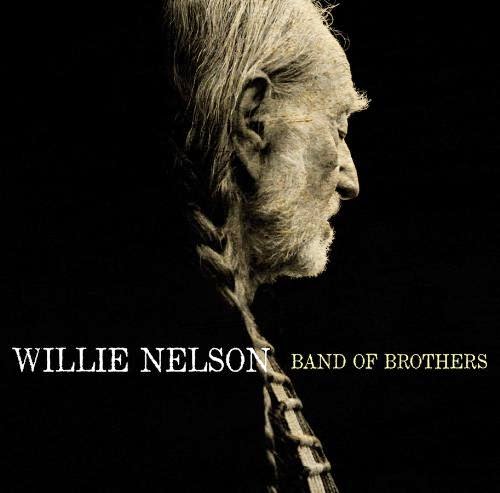
I enlisted Nelson’s Red Headed Stranger album when Duke lost in the first round of the NCAA tournament and I threw myself a tournament disappointment pity party back in March. Next, after scoring a pair of his records — Stardust and Willie Nelson and Family Live — at Goodwill a month or two ago, I started watching San Antonio Spurs playoff games on mute with his music as accompaniment, hoping that Nelson’s Texanity would help Tim Duncan and company keep up their winning ways. (It’s been going pretty well — the Spurs are tied 1-1 with the Heat in the Finals.) Then NPR had to go and post a First Listen of Nelson’s first album of new material in almost two decades, Band of Brothers.

Does Willie Nelson even like basketball? I have no idea. What I do know is that all this time with my redheaded brother from another mother has left me with a few, mostly unrelated impressions that I’d like to share in bulleted form:
Continue reading

Yasiin Gaye

Yasiin Gaye

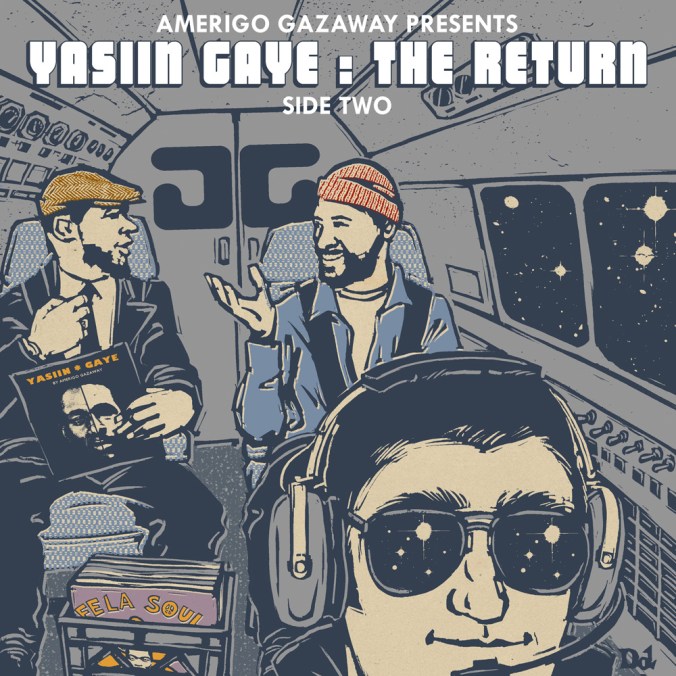
Just a quick check-in to let y’all know that side-b of the Yasiin Gaye mashup project I posted about a little while back just became available.

The whole thing is remarkably well executed, and it’s done me a huge service in waking me up to how terribly shallow my appreciation of these two artists has been. I have tremendous respect for both Marvin Gaye and Yasiin Bey, yet significant chunks of the Yasiin Gaye project are entirely unfamiliar, which tells me that there’s plenty of source material that I need to catch up on. The good news? Not only can I look forward to those study sessions, I can look forward to returning to Yasiin Gaye with the kind of perspective that will let me unpack the choices creator Amerigo Gazaway made when putting it together. For an intertextuality junkie like me, it’s hog heaven.

Click here to listen to/download the whole thing for free.

Yasiin Gaye — “Undeniable feat. The Temptations” [Bandcamp]

Spoiled Rotten

Veruca Salt

Wednesday was a good day. Ridiculously good. In rapid succession, I got to hear three amazing new albums, leaving me feel deliriously lucky and frankly a little spoiled. Like Veruca Salt, only without the tantrums and the dangerous drop down a chute designed for golden eggs.

Continue reading

Sturgill Simpson

Sturgill Simpson

On a trip to the Outer Banks weekend before last, Mrs. YHT and I managed to HBO Go our way through the entire first season of True Detective. Have you seen it? Parts are hard to stomach, but overall it’s pretty damn fantastic, thanks in no small part to Matthew McConaughey’s character — a brilliant-but-damaged fish-out-of-water detective nicknamed “Rust” with a penchant for philosophical self-torture and a belief that “human consciousness is a tragic misstep in evolution.” He’s part deep South and part deep end, somehow managing to feel authentically in the dirt and in the clouds at the same time. I can’t remember a character like him, nor can I imagine a better spirit animal for the album I became enamored with a few days after Mrs. YHT and I got back from the beach.

This is the first I’ve heard of Sturgill Simpson, and I might not have taken notice had it not been for NPR’s First Listen and the album’s name (which I love): Metamodern Sounds in Country Music. Ray Charles’ classic Modern Sounds in Country and Western Music is one of the more frequently spun records at YHT headquarters, and Simpson’s twist was intriguing: Country music about country music. Now, I didn’t grow up listening to country, and the listening I’ve done in recent years hasn’t been comprehensive enough to chase away the feeling that there are allusions and in-jokes lurking in these 10 tracks that I’m not wise to — details that would lend additional credence to the “meta” piece of the title. The genre-bending aspects of the album — nuggets of psychedelia like fuzz, drug references, heavy reverb and panning sounds so they travel from your left headphone to your right and back again — feel plenty meta though, showing a desire to poke holes in the membrane that separates country from other styles. That said, there’s a meta moment that hits even closer to home for me, and while it comes and goes quickly, it shows how one tiny detail can open a whole other set of considerations, like a wormhole leading to another universe.

Continue reading

Charles Bradley

Charles Bradley

When I was learning how to play guitar, I played a lot of Nirvana. Part of that was the timing — I was born in 1983 and picked up the instrument in middle school. The other part was the songs’ simplicity. Power chords, power chords, and more power chords. Three notes at a time? I could handle that. In fact, my first band was a duo that played pretty much nothing but Nirvana and Foo Fighters (we never made it out of my friend’s basement, but some glorious noise was made).

The irony is that while Nirvana may be perfect fodder for beginner guitarists, they’re an incredibly difficult band to cover. People do it, and some do it well, but it’s a tall order. That’s because both ends of the faithful-inventive cover continuum are boobytrapped. If you try to perform “Scentless Apprentice” exactly like Nirvana did, chances are you’re never going to match the throat-tearing, cymbal-smashing, strangely disaffected intensity of the original. Missing by just a little — not giving enough or screaming like an unhinged maniac — holds dire consequences (“dire” may be a bit overdramatic — you’d just be stuck with a smattering of awkward, tepid applause). Just as perilous is the idea of tinkering with a Nirvana song to put your own stamp on it. There’s a paradoxical quality to the emotional impact Cobain’s songs had. While the feelings he expressed were nuanced, with shades of depression, alienation, sarcasm and anger, his delivery was extremely visceral. Primal. Hovering just north of the human-subhuman dividing line. So jazzing up a Nirvana song — pouring intellect into something that’s nearly bestial — risks overcomplicating beauty that originated in a more basic place.

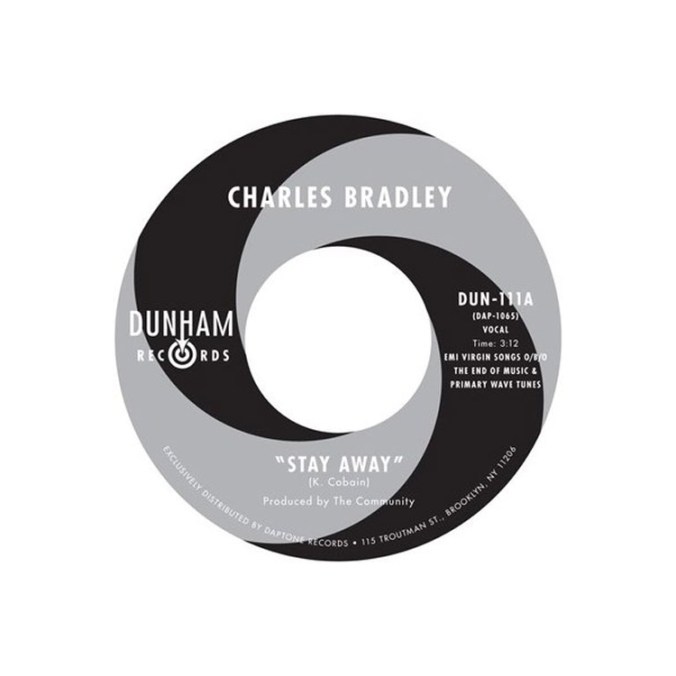
It’s a tiny sweet spot to hit, which is why Charles Bradley’s cover of “Stay Away” strikes me as so special.

Continue reading

Max Richter

Max Richter

Some non-bloggy writing (and a temporary lack of a laptop) is pulling me away this week, but I thought I’d share my current whistle-while-you-work music.

Max Richter’s 2002 album Memoryhouse was recently reissued for the second time on vinyl, and while I’m stuck listening on Spotify (Record Store Day wiped out my vinyl budget for the foreseeable future), it’s proving to be a very nice work companion. See what I mean by sampling my favorite track “Maria, the Poet (1913),” below.

Max Richter — “Maria, the Poet (1913)” [Spotify/iTunes]

Arthur Smith

Dueling Banjos

I found out yesterday that the man who wrote “Dueling Banjos,” Arthur Smith, died last Thursday at the age of 93. It was one of those moments in which you realize someone has made your life better in a specific and meaningful way, yet you never even knew that person’s name. Now I do, it’s Arthur Smith, and even though it’s too late, I’d like to say thanks.

Continue reading

EMA

EMA

I’m sequestering myself by not reading about an album I’m primarily interested in because of one of my favorite music writers. And I’ve written a blog post about it. The Internet is a weird place.

I love reading about music. I love the descriptions, the debates, the cultural contextualization, the personal preferences — there are so, so many songs and albums I never would have heard had I not read about them online. (I really think this interweb thing is going to bring people together, ya know?)

That said, every once in a while, it’s fun (important, even?) to listen in a vacuum. To dive into a lake knowing you’re the only one making ripples in it. That’s what I’ve been doing yesterday and today with EMA’s new album, The Future’s Void.

Continue reading

Nickel Creek

Nickel Creek

Doesn’t matter how many times I do it, I never get sick of flipping through my dad’s records when I’m in Norfolk. He left behind one hell of a collection, as I’m sure I’ve told you before, and whenever I’m home seeing my mom, I thumb through the shelves of classical, jazz and folk titles waiting to be dusted off and put in active rotation in Richmond.

You’d think that after (more than) a few times through, I’d have picked out the stuff I wanted, leaving behind the stuff I didn’t want, but it doesn’t really work that way. Each time I take a spin through my dad’s collection, I’m a different person. I’ve almost always fallen for a classical piece that I flipped past the last time, I may have learned more about a jazz musician my dad liked or maybe I decided that the Kingston Trio is worth a shot after all. Because I’m different each time, the collection is different each time. Physically, it sits there gathering dust, but as far as I’m concerned, it’s constantly in flux.

I’ve got this kind of relative change on the brain because Nickel Creek’s new, hiatus-breaking album A Dotted Line just went up for a First Listen over at NPR.

Continue reading