Carl Broemel

All Birds Say

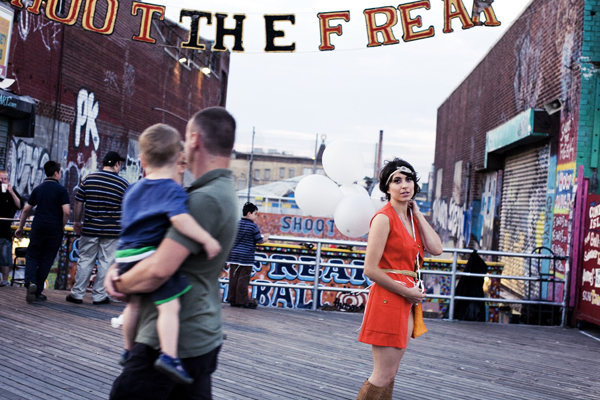
Sometimes you have to take an unpopular stance, though it’s nice when you have a good friend standing unpopularly with you. My buddy Coyle and I are both staunch supporters of the most divisive song in the entirety of the My Morning Jacket catalog. That’s right, Coyle and I are proud members of team “Highly Suspicious.” I’m pretty sure we both like it for the same reason, too — the hilarious, over-the-top serious way Carl Broemel, co-lead guitarist and backup singer to Jim James, delivers the song’s title lyrics. Watch the band performing the song on Austin City Limits to see what I mean…

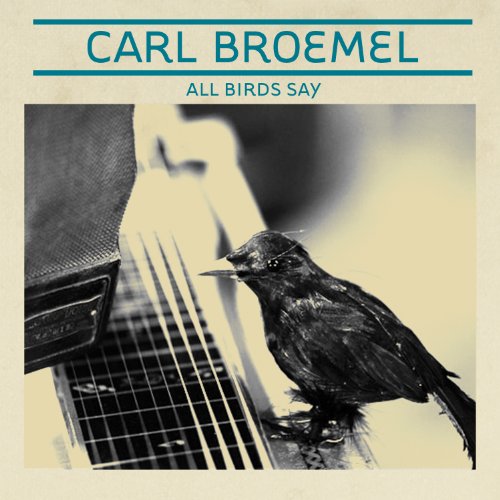
How can you not love that? It falls in some strange netherworld between parody and badassery, and ever since the first time I saw a video of “Highly Suspicious” being staged, I’ve watched Broemel with an added sense of enjoyment. That’s why I was so elated when the wonderful people at Daytrotter recently posted a session that finds Broemel performing 4 of his own songs that I had no idea existed, all of which can be found on an album he released last year called All Birds Say. I dove into the record as soon as I could, and it didn’t take long to learn that Broemel is as gifted at writing solo material as he is at the guitar-thrashing, falsetto-floating duties he executes so expertly as a member of My Morning Jacket. All Birds Say is a mellow record to be sure, but there’s a great deal going on in these largely down-tempo songs worth noting, including a fascinating relationship between theme and substance. Many of the songs deal with the idea of spare time, surely a commodity when you’re part of an overwhelmingly successful band, with titles like “Sunday Drivers” and “Retired,” and lyrics like “I was waiting for the moment to be perfectly clear, when the world would stop and let me catch up,” and “save an hour for yourself.” Images like these appear throughout, and pair perfectly with the choice of tempo and mood. Too perfectly, in fact. That’s what’s most interesting about All Birds Say — it’s a leisurely sounding record about trying to find time for leisure, which, as any busy person can attest, is hard work. After doing some research, I wasn’t surprised to find that he recorded the album one song at a time, whenever he had an opportunity, over the course of 4 or 5 years, so it’s no wonder he’s focused on those elusive spare moments. Even his guitar work reflects this odd coupling of efficiency and relaxation. “Questions” features a walkdown that sounds so breezy on the surface it could have followed a drunk down the street in an old Disney cartoon, but it includes just about every single in-between note that particular scale can hold. So loose, yet so tight at the same time. And these extra, in-between notes are everywhere on All Birds Say. I’m enjoying the album so much I can’t decide which song to recommend, so I’m including performance videos of three of my favorites — “Questions,” “Carried Away,” and “Heaven Knows,” where he pushes the leisure theme even further by playing the song on an autoharp in the middle of a round of golf. Check out these three great songs below, his Daytrotter session here (you’re a member already, right?), and buy All Birds Say here.

Carl Broemel — “Questions

Carl Broemel — “Carried Away

Carl Broemel — “Heaven Knows

Firehorse

We live in a cynical world. A world full of misinformation, self interest, greed and deception, one that’s trained us to question everything we see, hear, smell, taste and feel. For crying out loud, we can’t even walk our friends and family to the gate at the airport anymore, which makes this heartwarming moment heartbreakingly impossible. I love that scene. This is the best we can do now. Sigh. Plus, all this skepticism means that when you encounter real sincerity, whether it’s in another person, or a gesture, or a piece of art, it can be downright alarming. But you know what? It’s also unmistakable. It jumps out at you. I recently encountered a song that jumped out at me thanks to its inherent sweetness and sincerity, and I’ve been playing it a few times in a row whenever I need a reminder that the world isn’t as hard-hearted as it may seem sometimes. I’m talking about “If You Don’t Want To Be Alone” by Firehorse, one of the bands I learned about from All Songs Considered’s fantastic CMJ recap episode. “If You Don’t Want To Be Alone” is written from the perspective of a person who’s yearning for a loved one to return home, and it paints a picture of unconditional devotion and steadfast companionship that makes every cynical notion in my body melt away, with lines like “You can come back whenever you’d like” and “If you need rest, I’ll stay right by your side.” And the lyrics aren’t the only touching part of the song — the arrangement reinforces this narrative beautifully. Singer Leah Siegel’s voice is set against a backdrop of sparse instrumentation, reverb-soaked and distorted guitars and fading echoes of indeterminate origin, making her words seem like an earnest oasis of humanity in a vast and frightening sonic darkness. That image of a small light shining brightly in the dark was so moving during one particular cluster of repeated listens that I tweeted at her so I could say thank you for improving my afternoon, and that her album And So They Ran Faster… was exactly what I needed to hear at that particular moment. Sure enough, she sent back a short note of thanks that exhibited the same genuineness that drew me to her music in the first place. Much like her song, it was the kind of exchange that makes the rest of the world feel a little less cynical, which counts for a lot in my book. Give a listen to “If You Don’t Want To Be Alone” below, buy the album here, and click here to learn about the charitable organization for which the song was originally written, the Topsy Foundation.

Firehorse — “If You Don’t Want To Be Alone

Mungo Jerry/The Who

In the Summertime

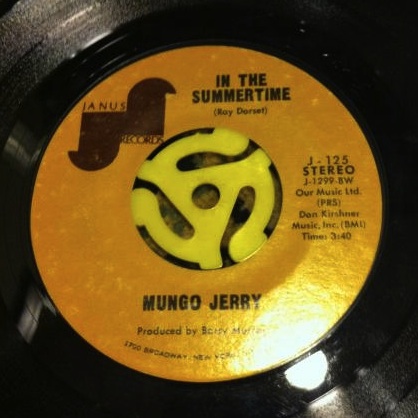
Oh daylight savings time, you double-edged sword, you. On one hand, you generously give us an extra hour of sleep each fall (which I promptly throw away by staying up extra late on Saturday night, but still…). On the other hand, “falling back” means it’s already dark when we leave work, which raises just about everyone’s ire, even those of us without Seasonal Affective Disorder, the most insensitively named psychological disorder since Wanton Unfortunate Sissiness Syndrome, which, as we all know, took the crown from Neurologically Unstable Tempestuousness Sickness. But you know what, daylight savings time? YOU’RE NOT THE BOSS OF ME! It just so happens that the day before you so rudely made it feel like winter overnight, I unwittingly armed myself with two powerful weapons that, as I listen to them on this dreadfully depressing Monday, make your assault on happiness and a gradual transition away from summer seem, well, wussy (my apologies to those with W.U.S.S.). You see on Saturday, I went 45 diving at Plan 9 and came to the surface holding, among other things, Mungo Jerry’s “In the Summertime” and the Who’s “Summertime Blues.” While both were recorded by English rock groups in the 1970’s, the mood of these songs couldn’t be more divergent. “In the Summertime” is a carefree original tune with lyrics about having fun, fishing, drinking and driving, and, um… not buying poor women dinner before you try to have sex with them. Conversely, “Summertime Blues” is a canonical, angst-ridden anthem that chronicles a teenager’s frustration with being too young and poor to make his own decisions. Looking closer, even the songs’ writers are opposites. “Summertime Blues” was originally written by rockabilly artist Eddie Cochran, who died in a road accident when he was just 21. Mungo Jerry, however, is still active, thanks to intrepid frontman/mutton chops connoisseur Ray (don’t call me Jerry) Dorset, who has led the band for an astonishing 41 years. But as different as these songs are, they both chase away the seasonal gloom by conjuring some really special memories of fall’s younger, more popular sibling. “In the Summertime” calls to mind all the fun I had performing the song with bandmates 4eva Doug and Brett when I had just graduated college, and “Summertime Blues” takes me back to car rides spent listening to early rock with my 50’s-crazed dad, back when I was way too young to understand that he was dutifully laying the groundwork for an appreciation for the genre’s founding fathers. With these two songs filling up the living room, it doesn’t matter if the clocks have been set back to the correct hour, or even which month is showing on the calendar, because it sounds like summertime, and that’s close enough. Listen to both tunes below and join me in telling daylight savings time to stick it where the sun does shine.

Mungo Jerry — “In the Summertime

The Who — “Summertime Blues” (Eddie Cochran cover)

Mudhoney/George Clinton

Jason Isbell is one of my favorite musicians to follow on Twitter, in part because he has a fantastic philosophy about musical guilty pleasures. He summed this doctrine up perfectly on October 1 of this year, in a tweet that read, “There should be no guilty pleasures. Feel guilty about not enjoying things. Enjoy everything you can.” Those 102 characters made me so happy (as did some similar comments he made in an interview with Hear Ya), because they encapsulated my long held conviction that music is entirely what you make of it — you can dwell all you want on a band’s faults or a record’s weaknesses, but it’s way more fun to celebrate the aspects of that band or record that bring you joy. One reason this is true is that music, in many ways, is a personal experience. Sure, concerts can double as social events, and making music is extremely interactive, but the way we react to the songs we hear through our headphones is as personal as it gets. Sounds travel down our uniquely shaped ear canals, hit our one-of-a-kind ear drums and make their way up to our beautifully peculiar brains, and no two reactions are ever the same, so why apply a collective construct like shame to such a wonderfully solipsistic phenomenon? This idea jumped to the front of my mind when I was flipping through singles at Plan 9 and found a 7-inch single that was released to promote PCU, my favorite “Oh man, I can’t wait to get to college, it’s gonna be so awesome!” movies of my adolescence. My inner 14-year-old was beyond thrilled. I have such fond memories of, and strong mental associations with, the two featured tracks — Mudhoney’s cover of Elvis Costello’s “Pump It Up” and George Clinton and Parliament Funkadelic’s recording of “Stomp” — that I honestly couldn’t believe what I was seeing. It was as if I had stumbled across the glowing contents of the Pulp Fiction briefcase in that record bin (And it was just $3!). For a moment, I felt silly for my enthusiasm, but just as quickly, I realized I had found a glowing (literally — the vinyl is red!) testament to the fact that value is in the eye, or ear, of the listener, and that even though a record may only fetch a few bucks on ebay, it can still feel like a totally priceless artifact. If you’re as crazy about PCU as I am, you can bid on your own copy of the single here, and listen below to “Pump It Up” and “Stomp.” And don’t forget, no classes before 11, and beer is your best friend, so drink a lot of it. Now, can you blow me where the pampers is?

Mudhoney — “Pump It Up” (Elvis Costello cover)

George Clinton – “Stomp

Unknown Mortal Orchestra, Chapter 2

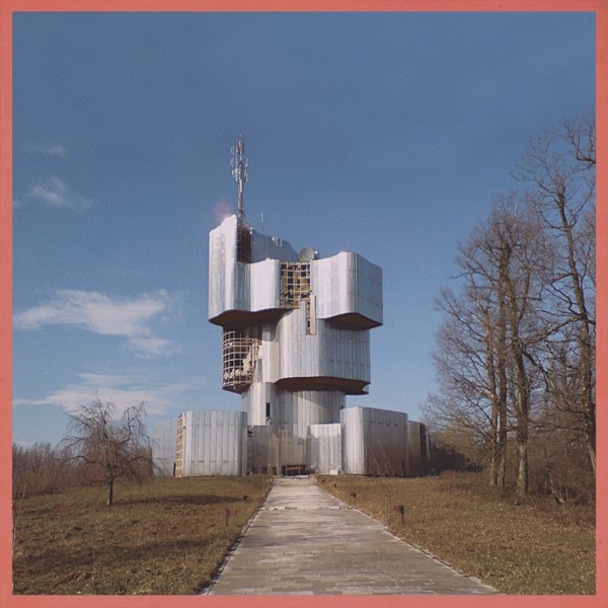
Something happened while I was writing about Unknown Mortal Orchestra yesterday — an action and reaction that, together, confirmed some of my core beliefs about the nature of peoples’ relationship with music. As I wrote, out of nowhere, my Twitter feed swelled with posts about how Daytrotter, one of my favorite sites for music on the entire world wide interweb, had decided to start charging $2 per month for access to their outstanding library of hundreds of downloadable, in-studio recording sessions. For years, these sessions had been free, an offering that seemed almost too good to be true, given the the artist selection, frequency of new sessions posted — multiple sessions are added each day — and the exceptional user experience (not to mention the insightful write-ups and the original artist illustrations, which deserve their own wing of a museum). When you consider the natural aversion to paying for something that had previously been free, you might have expected outrage and disappointment at this announcement. Nope. This was the anti-Netflix. The response on Twitter was overwhelmingly supportive, an outpouring of appreciation for a site that has helped so many people discover and enjoy new music since 2006 (two of my favorite reactions — @captainsdead tweeting, “one less pbr a month can get you a seemingly unlimited amount of awesomeness over at @daytrotter. just signed up. you should too...” and the Counting Crows adding, “$2 per month? People, WE are stealing from THEM. If music has a future, its @daytrotter…”). As I bought my subscription, I had the same feeling of empowerment and civic responsibility that comes with supporting public radio, and as an added bonus, it gave me an opportunity to cast my vote for a future where people still want to pay for and support music, even if we’re not sure exactly what that future is going to look like. After I was done registering, just for fun, I checked to see if the band I was writing about had recorded a session in Daytrotter’s Rock Island, IL studio. Serendipity struck and, sure enough, Unknown Mortal Orchestra recorded a session on September 7 of this year. Some things are just meant to be. Click here to sign up for a Daytrotter membership and here to listen to Unknown Mortal Orchestra’s session if you’re already a member. And if you need an extra bit of convincing, preview UMO’s Daytrotter recording of “Boy Witch” below.

Unknown Mortal Orchestra — “Boy Witch

Unknown Mortal Orchestra

A short time ago, I wrote a series of posts entitled “What the Hell Just Happened Week” as a way to make sense of having seen 7 fantastic bands in the span of 5 days. I thought that was pretty crazy. I was wrong. I was oh so very wrong. 7? Try 1,000+. That’s how many bands performed at this year’s CMJ Music Marathon, which took place October 18-22. For those 5 days, more than 1,300 up-and-coming bands played showcases (sometimes putting on more than one show a day) in and around the NYC area for overstimulated throngs of music journalists, bloggers and fans, and it makes my head explode just trying to imagine being there. I’ve been to South by Southwest before (HEAR THAT?!? I’M HIP! DROPPING SXSW IN THERE LIKE IT’S NO BIG DEAL! OK, so I was there for the interactive conference), but I didn’t know much about CMJ’s Marathon until yesterday. Thankfully, my musical sherpa Bob Boilen fixed that. In this week’s episode of All Songs Considered, Bob gave a rundown of the CMJ experience with the help of music editor for The Village Voice Maura Johnston and writer and videographer for The L Magazine Sydney Brownstone. In just 49 minutes, they shared their first impressions of 12 of the participating bands, and I beg you give the episode a listen. Never has my Spotify “Chekkit” playlist (the one I use to check out new/unfamiliar bands) expanded so quickly. One of the groups that made an exceptional first impression was Unknown Mortal Orchestra, a super creative band from Portland, OR/Auckland, NZ (practically neighbors) that snags elements from all over the musical spectrum, crafting songs that range from “I must dance right this minute!” to “I need to listen to this about 27 more times to unpack all the interesting notes and changes.” The song below, called “Jello and Juggernauts,” leans more towards the second category, and I hope you’ll have a listen and grab their self-titled album on iTunes here.

Unknown Mortal Orchestra — “Jello and Juggernauts

Ryan Adams

Ashes & Fire

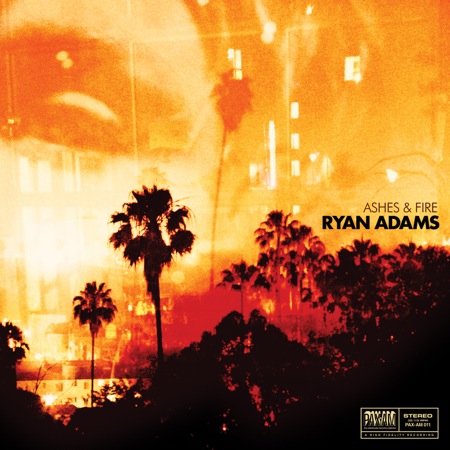
Soooooo… got any plans for Black Friday? Gonna do a little shopping? Maybe hit up a few sales? Charge a Walmart or two? Me too! Just kidding, I’m terrified of Black Friday. Frankly, I’m pissed off I even have to capitalize the first letters of Black Friday (but Wikipedia capitalizes them, and we all know Wikipedia’s never wrong). But there is one thing happening the day after Thanksgiving that has me ready and willing to enter the fray of the biggest shopping day of the year: Record Store Day, Black Friday edition. Record Store Day is an event that encourages music lovers to head to their local independently owned record store, have some fun and buy some physical media, including hundreds of special, often limited edition, releases from bands who believe in the cause of keeping local music stores alive. While this year’s main event already happened on April 16, you can still make it to the smaller, but no less exciting, event on November 25. I’ll stay off my soapbox, except to say it was sad to see Richmond, VA fixture Plan 9 file for bankruptcy protection, though I’m optimistic this step will help them adapt so they can continue serving the community, as they have done for 30 years. So what can YOU do to help? Go out and buy some music on Black Friday! One release I’m prepared to shamelessly fight over in public is a 7″ of Ryan Adams song “Do I Wait,” from his marvelously mellow new album Ashes & Fire. If you’re not familiar with him, Adams is known as a songwriting machine, generating new material at an astonishing clip. While that may be true, it doesn’t change the fact that Ashes & Fire is a top-notch collection of soulful and earnest country rock songs that should absolutely not be missed. Have a listen to “Do I Wait” below, and if you’d like it, click here to find a locally owned store, like Plan 9, where you can pick up a copy from a nice, potentially tattooed human being working the register, who will probably tell you “Have a nice day!” when you leave. Unless you buy something by Justin Bieber. All bets are off at that point.

Ryan Adams — “Do I Wait

Ra Ra Riot

The Orchard

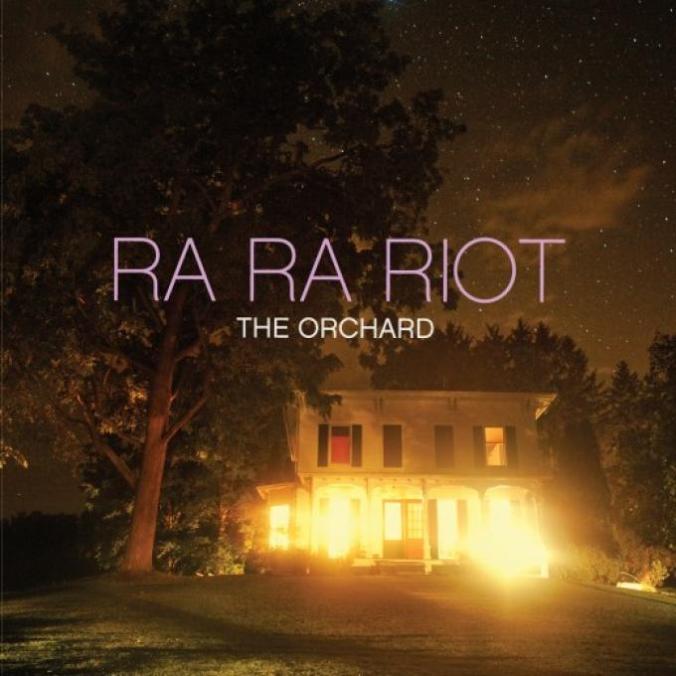
Last Tuesday, I wrote about Rostam Batmanglij’s musical midas touch, which turns every composition he touches to gold. Well in the eight days between then and now (Can we call eight days a Beatles week? Kinda like a baker’s dozen? Anyone?), I found out that he’s connected to an album that I was already enjoying immensely, The Orchard by Ra Ra Riot. Though Batmanglij’s participation in the record is limited to “Do You Remember,” a song that he mixed and maybe even co-wrote (I found conflicting information about whether he helped write the song or not), the whole album shares the ornate production and willingness to experiment with instrumentation and mood that have drawn me to Batmanglij’s collaborations in the past. In truth, my first listen of the album was somewhat flukey, as I started playing it while haphazardly testing out MOG’s streaming music service for an article I wrote for the Phonograph, a great UK-based music blog. Even though I moved on to try out other streaming services and websites, I kept the MOG window open so I could keep listening to The Orchard. I just couldn’t turn it off. Maybe it was frontman Wes Miles’ voice, which climbs so gracefully and feels like an estranged best friend, thanks to the fact that I went through a truly obsessive period of listening to the record he did with Batmanglij under the name Discovery. Or maybe it was the string arrangements, which add depth and shape on more than one level, thickening the mix sonically while counterbalancing the gravity of the lyrics, some of which deal with topics as weighty as a former bandmate’s death. For me, that’s Ra Ra Riot’s strength – being light and heavy at the same time, so you’re left with a feeling of pleasant (or as good friend of the blog Trang put it, “pla pla pleasant”) depth. It’s a quality that inspires repeated listening, making them the musical opposite of a movie like There Will Be Blood — an amazing film that I liked very much but never want to sit down and watch again. Ever. Please don’t make me. I will keep listening to The Orchard, and I hope you’ll check out “Do You Remember” below. If you dig it, click here to snag the album from iTunes.

Ra Ra Riot — “Do You Remember

Black Keys

Us music fans are a fickle bunch, aren’t we? We love having gigs and gigs of tunes, but we’re not so fond of paying for them. Even though 10-buck-a-month streaming music services like Spotify are on the rise and are a step in the right direction, nothing fattens up a royalty check like consumers actually buying an album, be that a CD, record or download from an online store like iTunes. Well some bands aren’t taking the fight lying down. As record sales decline, we’re seeing some wildly creative promotions associated with album releases, and I salute the bands behind them. Take Wilco for example, who entered everyone who preordered their new album, The Whole Love, into a weekly giveaway contest, where one of the prizes was a Wilco-themed fixed-gear bicycle (insert your own “I’m a Wheel” joke here). Or take the Flaming Lips, who recently released music on a USB drive that was buried inside a 7-pound gummy skull (honestly, this is among the tamest of Wayne Coyne’s recent experiments with packaging). Or St. Vincent, who turned the release of the first single from her new album, Strange Mercy, into an interactive event, inviting fans to tweet the hashtag “#strangemercy” and posting the song to her website once enough people did. Well I have a new favorite in the world of viral marketing: The Black Keys. The purveyors of one of last year’s best albums in Brothers have just announced their new album, El Camino, and they’ve enlisted  the help of Bob Odenkirk of Mr. Show with Bob and David and Breaking Bad fame in promoting it. In the video above, Odenkirk plays a used car salesman who is trying to sell a crappy van identical to the one that, despite its not actually being an El Camino, graces the upcoming album’s cover, but he can’t seem to get a decent take of the commercial he’s shooting. It’s a great clip, especially if you’re familiar with the actor’s body of work, or if you’re super depressed because Breaking Bad just ended and you need something, ANYTHING that’ll chase away the withdrawal symptoms for a spell. Ya know, whichever. Check it out above, listen to “Psychotic Girl” from their previous album below, buy Brothers here and start getting excited for December 6, when El Camino rolls into a record store near you.

The Black Keys — “Psychotic Girl

ROSTAM

Wood

Every once in a while, you come across an artist who can do no wrong in your eyes. Song after song, album after album, it seems like everything they touch turns to gold, and your brain reflexively clicks on every link within a 70-pixel radius of their name. Not to get all double rainbow guy on you, but I really believe it’s a meaningful connection — finding someone who shares your tastes and is capable of creating music that satisfies them time after time, especially across multiple bands or projects, is extremely rare. Call it having a musical kindred spirit. Such is the case with Rostam Batmanglij. Whether with Vampire Weekend, Discovery, Kid Cudi or Das Racist, I have yet to find a song he’s been involved in that I didn’t like, which is why I was thrilled when I saw he released a song under his own name, stylized as ROSTAM, and even more thrilled once I listened to it. “Wood” is a fascinating composition, and it’s an excellent exemplar of one of Batmanglij’s most laudable traits — one that has served Vampire Weekend and all his other projects very well — like the speedy neutrino, he can travel faster than the speed of light. I’m convinced of it. How else can he be in India playing traditional drums and sitar, in Europe playing classical strings from the 18th century, and at the same time be singing contemporary pop vocals? You can’t explain that! He lives in the space between genres more comfortably than any other artist I know, which has made him a tremendously interesting musical kindred spirit over the past few years. Check out “Wood” below, and if you like it, I beg you to grab Discovery’s album. You’ll go bonkers over it, I promise.

ROSTAM — “Wood