Asaf Avidan

Asaf Avidan

This album is a many-splendored thing, but good lord. What a voice.

Hearing Asaf Avidan’s voice for the first time is a jolt. Halfway through Gold Shadow, it sounded as natural as could be — versatile and expressive, too — but it seemed almost improbable at first. The combination of flexibility and gritty texture. He’s a reminder of something that’s easy to take for granted — that even though voices are like fingerprints, getting to hear something wholly distinct is rare and valuable.

Continue reading

Aqualung

Aqualung

Underneath the eggshells, guess what I found? Solid ground.

As someone who lives with a non-small amount of anxiety, and who says “I’m sorry” somewhere between a dozen and a hundred times a day, I can’t tell you how powerful the payoff of this lyric was the first time I heard it. I’m planning on keeping this song close by, both for the soothing effect it has and for Lianne La Havas’ guest appearance, which is characteristically wonderful.

Continue reading

Clair Morgan

Clair Morgan

Some bands you find out about right when they’re getting started. Cavern Club regulars — I’m looking (with immeasurable jealousy) at you. Other bands you fall for after they’ve stopped making music, and looking back is all you have. For all the bands that fall in between, one of the most interesting moments is when you find out, for the first time since you’ve started listening, that a new album is coming out — it’s when your fandom jumps out of the past and into the present. I’m so excited to be living in that magical, blue-sky moment with Clair Morgan.

Continue reading

Hoax Hunters

Hoax Hunters

Look at you. You’re exhausted! This week has taken its toll, hasn’t it? What’s that? You say you’re just going to pick up a six-pack on the way home and drink it in your pajamas while watching episodes of Pawn Stars you’ve probably already seen before? That you’re going to use the weekend to “recharge the ol’ batteries”?

That’s crap, and I have just the thing to wake you up from your weekday-weary stupor.

To mark the second anniversary of its first release, Negative Fun Records just released a Hoax Hunters bonus track titled “Manteeth” — an evolutionary version of the song that first got me listening to Hoax Hunters. It’s about as fast and direct a blast of energy as you can get without breaking the law or consuming 2000% of your daily recommended B6 intake.

Listen to “Manteeth” below and click here to snag Hoax Hunters’ full-length, Comfort & Safety.

Hoax Hunters — “Manteeth” [Bandcamp]

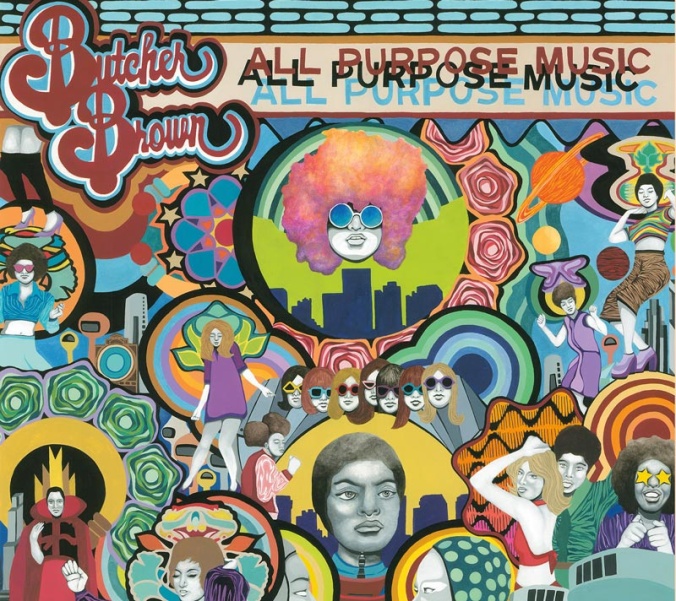
Butcher Brown

Butcher Brown

Posting may suffer a bit as I work on year-end/top-10 stuff. I never used to be this interested in making lists (and the whole concept of ranking art is more than a little objectionable), but looking back at the songs and albums that stood out and why seems to be getting more fun and important to me with each passing year. Maybe because it gives me an excuse to go back and write about albums I already wrote about and would write about over and over if I didn’t think it would be annoying. Maybe I’m just getting old. Maybe both.

It’s both.

ANYHOO, I thought I’d share some whistle-while-I-work music.

Continue reading

Olivier Messiaen

Messiaen2

I’ve been listening to Olivier Messiaen’s Quatuor pour la fin du temps (“Quartet for the End of Time”) quite a bit lately. I stumbled across a copy at Goodwill — the version with a shattered swastika on the cover. Remembering that Radiohead guitarist Jonny Greenwood has cited Messiaen as a major influence, and that Greenwood’s brilliant application of the ever-spooky ondes Marteno owes a great deal to Messiaen, I decided having the record was worth the dollar I’d pay for it and the intense awkwardness I’d experience when handing the cashier something with a large swastika on it. (That same discomfort is why I didn’t include that version’s cover at the top of this post. I love vinyl album art, but it’s a little hard to stomach.)

A little background on the piece: Messiaen was a soldier during World War 2, and in 1940, he was captured by the German army and placed in a POW camp located in what is now Poland. Detained in the same camp were a violinist, a cellist and a clarinetist, and Messiaen set about to write (“finish writing” might be more accurate — I read that some sections were built on existing compositions) a piece suited to the players who were imprisoned with him. A sympathetic guard provided a pencil and paper for composing, and the authorities eventually furnished his quartet (Messiaen on piano) with the instruments they needed to premiere the piece in January of 1941. It’s weighty, as you might imagine, drawing on themes related to the book of Revelation — pillars of fire, heaven, eternity — but there are these wonderful contrasting moments of levity. Whole movements are inspired by bird songs (Messiaen was big into ornithology), making for wonderful light/dark clashes. Thunder and lightning, hand-in-hand. Powerful stuff, especially when you consider the conditions in which it was composed.

I listened to “Quartet for the End of Time” again this morning, looking for something that could measure up to the weight my heart was and still is feeling.

Continue reading